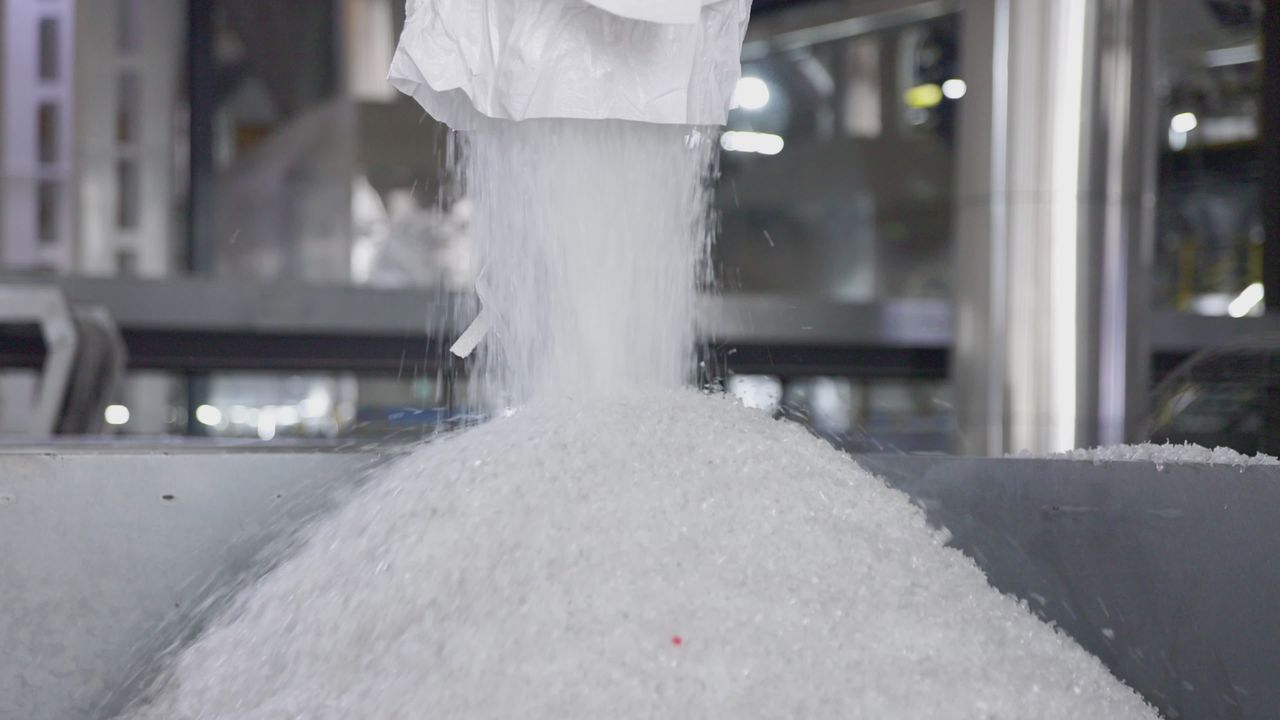
01 · Raw material
PP granules & masterbatch
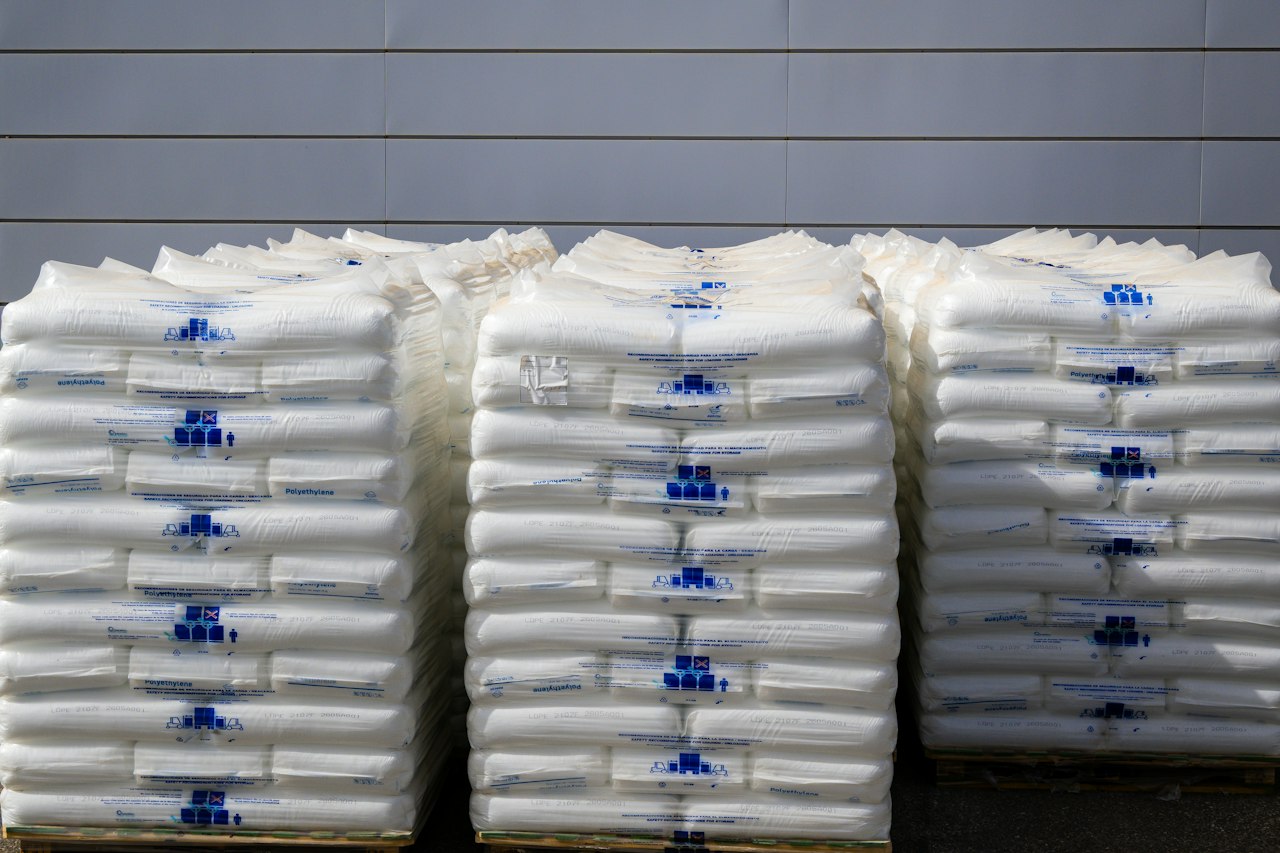
Raffia-grade polypropylene granules are blended with calcium carbonate filler, UV stabiliser and colour masterbatch, then fed into the extruder hopper.

About us
Sahyadri Polypack Industries manufactures polypropylene woven packaging at MIDC Miraj, Sangli district, Maharashtra, India, from tape extrusion and circular weaving to printing, stitching and baling.
Who we are
We make PP woven sacks, BOPP laminated bags and PP woven fabric rolls for businesses that pack and move bulk goods: food grains, sugar, flour, poultry and animal feed, soybean meal from solvent extraction plants, fertilisers, cement and industrial materials. Poultry feed and solvent extraction are our largest customer industries.
Every order starts with the buyer's requirement. We set the tape denier, fabric GSM and mesh, coating, liner and print to suit the product the bag will carry, the way it will be filled and stacked, and the conditions it will travel in.
With our Import Export Code in place, we are set up to supply buyers outside India as well as at home, handling export packing, documentation and dispatch from our factory in Miraj.
What we focus on
Tape denier, fabric GSM and stitching are held to specification from the first bale to the last, so your filling, stacking and handling run smoothly.
Size, GSM, mesh, coating, liner and artwork are confirmed in writing before production begins, so what arrives is what you ordered.
You deal directly with the manufacturer for feasibility, pricing and delivery schedules, without layers of middlemen.
Our production line
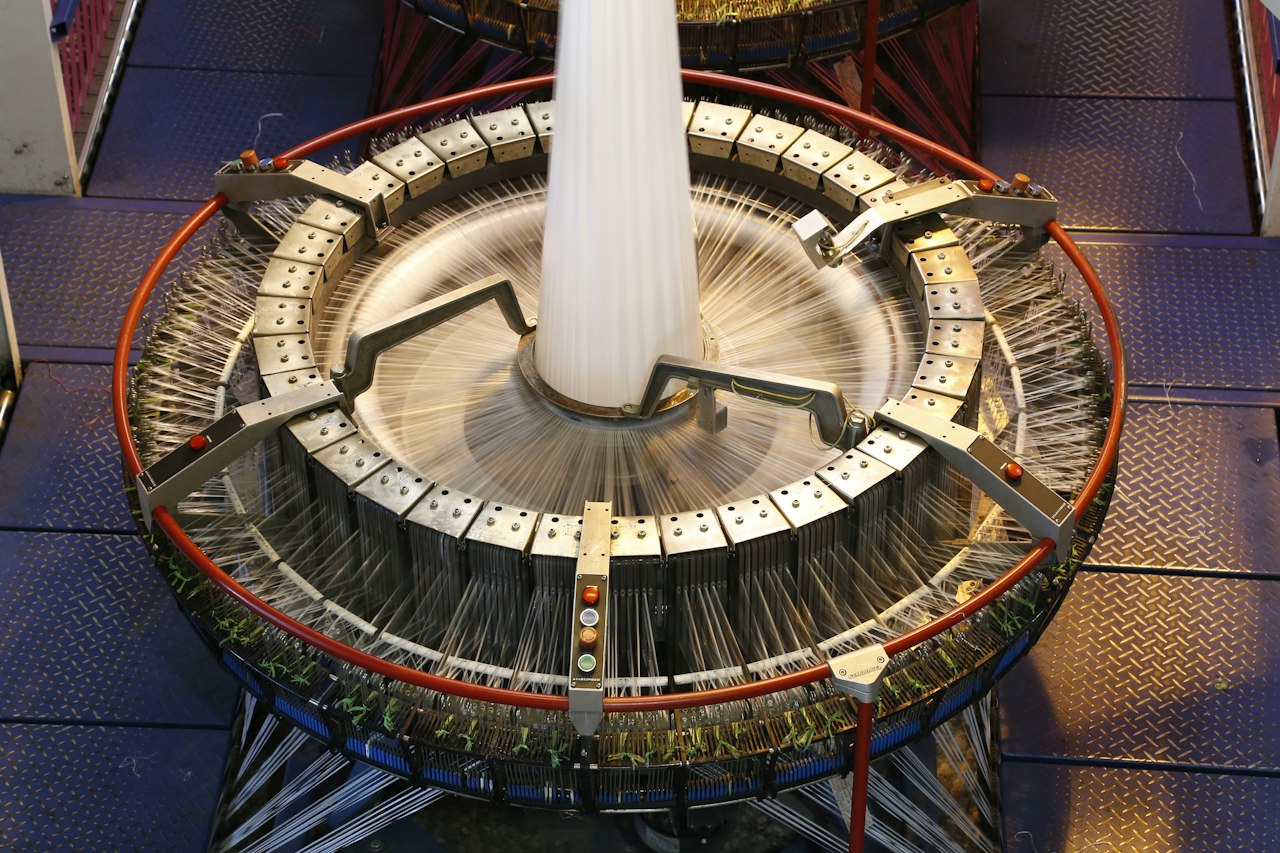
A PP woven sack is made in seven stages, each on its own machine, and each set to your specification.
Raffia-grade polypropylene granules are blended with calcium carbonate filler, UV stabiliser and colour masterbatch, then fed into the extruder hopper.
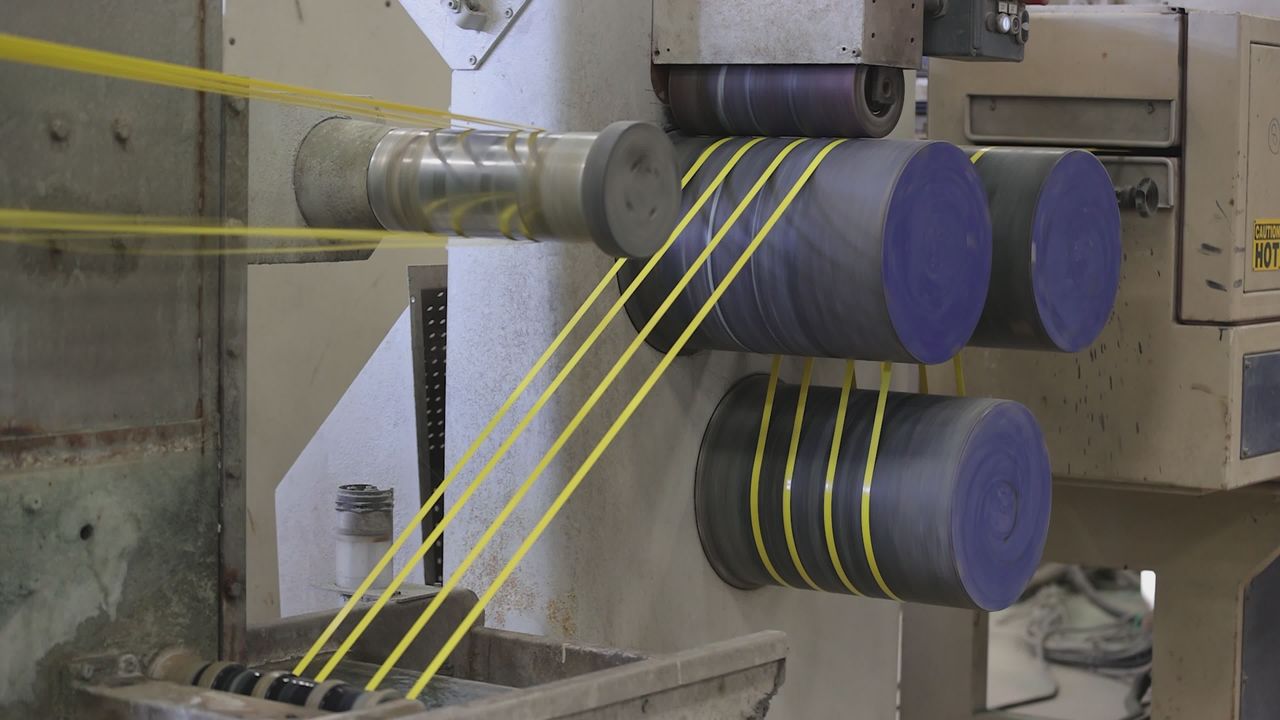
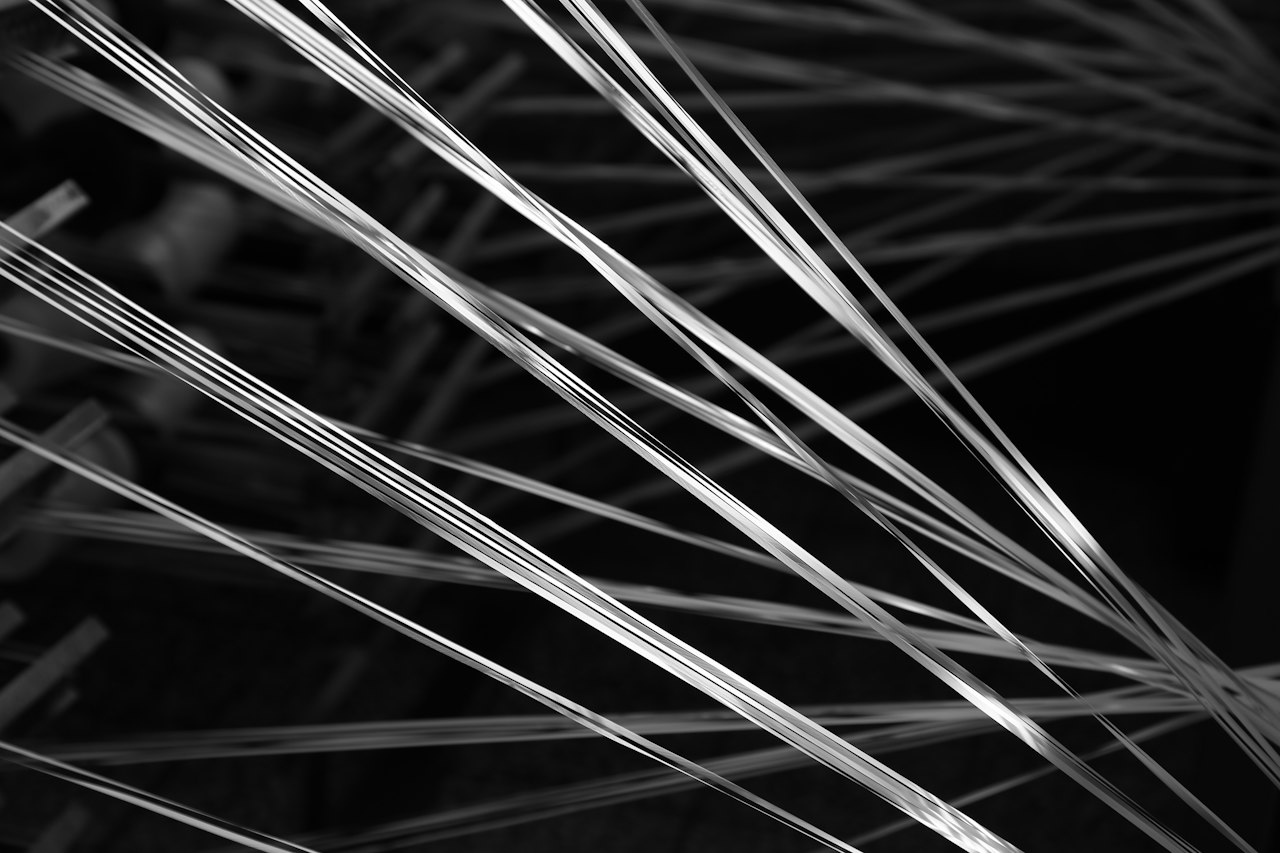
The melt is cast into film through a flat die, quenched, slit into tapes and stretched over heated godet rollers for tenacity, then wound onto bobbins by automatic winders.
Warp tapes from the creel and weft tapes from the shuttles are woven into seamless tubular fabric of the specified width, mesh and GSM.
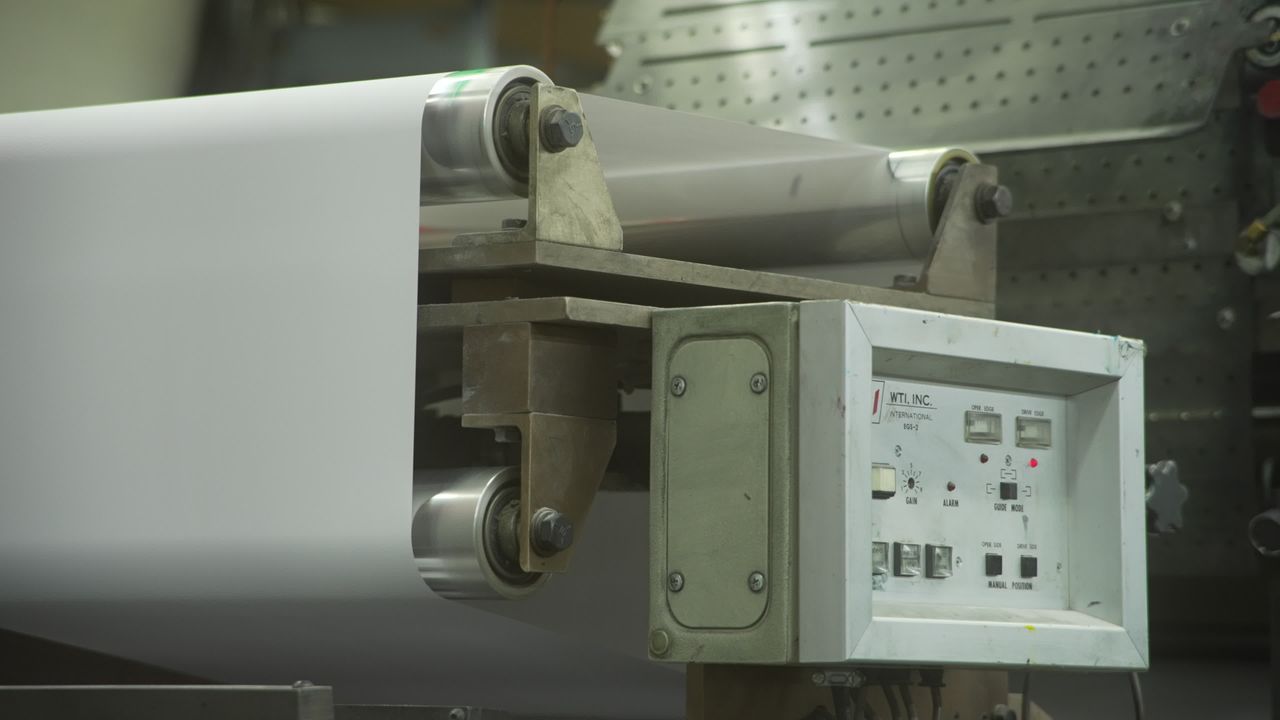
An extrusion line coats the fabric with a thin PP/LDPE layer for moisture resistance, or bonds reverse-printed BOPP film to it for laminated bags.
Woven sacks are printed on flexographic machines in up to four colours; BOPP film is rotogravure-printed for photographic, multi-colour graphics.
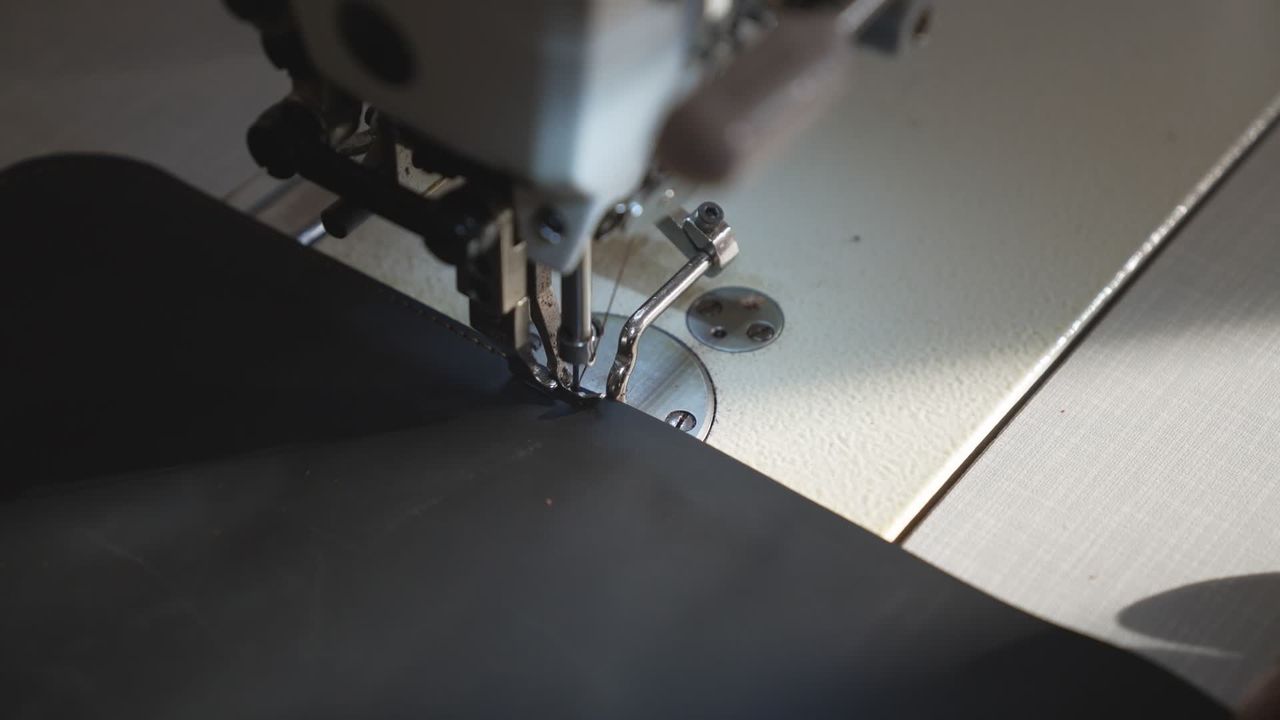
Fabric is cut to bag length, the mouth is hemmed or heat-cut, and the bottom is single- or double-folded and stitched. Liners are inserted where specified.
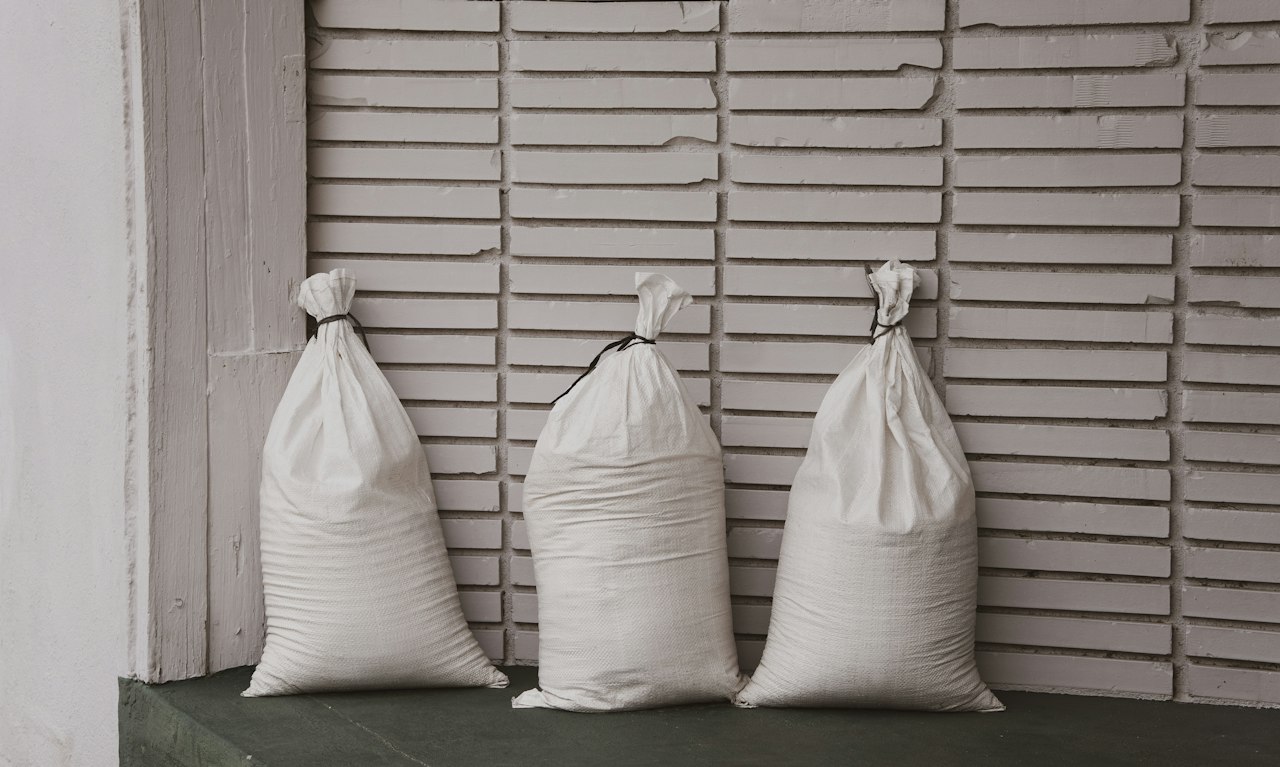
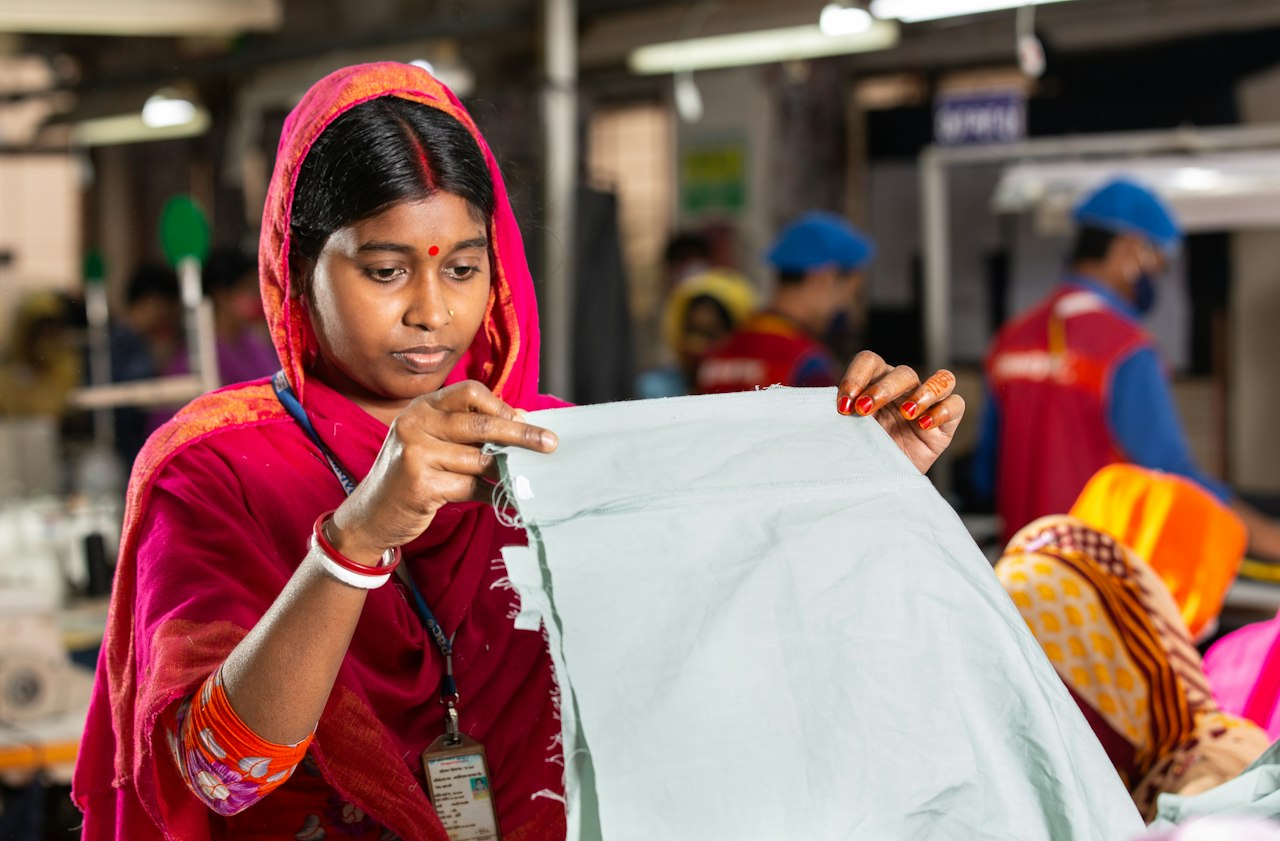
Finished bags are inspected, counted into bundles, compressed into strapped bales and labelled with your markings for the container.
Quality
A strong sack comes from controlled raw materials and routine checks at each stage of production.
Our ZED (Zero Defect Zero Effect) certification reflects our commitment to quality and to responsible manufacturing. Tell us the tests or standards your market requires, and we will confirm how we can meet them.
Location
Our factory is in the MIDC industrial area of Miraj, Sangli district: a railway junction town in southern Maharashtra with road links to Kolhapur, Pune and Mumbai, and on to the container ports of India's west coast.
Buyers are welcome to visit the factory by appointment. Please contact us by email to arrange a visit.
Start a conversation